

STOP THE SHOCKS
WHY ARE POWER LINES KILLING WILDLIFE?
Costa Rica is home to extraordinary biodiversity, but in rapidly developing communities like Nosara, electrical infrastructure has become a serious threat to arboreal wildlife.
Howler monkeys and other arboreal animals naturally travel through the canopy. As forests become fragmented by roads and development, power lines can become part of the routes they use to move between remaining areas of habitat. Contact with two energized components — or an energized component and a grounded surface — can result in severe or fatal electrocution.
Our Nosara Wildlife Rescue Center responds to more than 100 electrocuted howler monkey rescue calls each year.

WHY IS THIS HAPPENING?

Development and the loss of connected tree canopy leave wildlife with fewer safe routes through their habitat, increasing the likelihood that animals will use electrical infrastructure to travel.
Exposed energized components, including distribution lines and transformers, can pose a serious electrocution risk when wildlife moves across them.


Wildlife doesn't recognize electrical infrastructure as a threat. For an arboreal animal, a cable can simply become another way to cross a gap in the canopy.
Costa Rica has regulations intended to reduce the impact of electrical infrastructure on wildlife, but effective and consistent implementation remains a challenge.

HOW WE'RE WORKING TO PREVENT ELECTROCUTIONS
Our prevention work focuses on identifying where wildlife is most at risk and helping turn that information into action.

1. IDENTIFYING HOTSPOTS
We collect and map wildlife electrocution incidents to identify recurring hotspots and areas where electrical infrastructure poses a significant risk.
2. REPORTING AREAS FOR INTERVENTION
We assess and document high-risk locations and report them to the relevant authorities. This can include areas with recurring electrocutions, unprotected electrical infrastructure, vegetation creating access to dangerous power lines, or gaps in the canopy where a wildlife bridge may provide a safer route.
3. PUSHING FOR IMPLEMENTATION
Costa Rica already has laws and regulations designed to reduce the risks electrical infrastructure poses to wildlife. We advocate for their effective and consistent implementation so that these protections lead to meaningful action on the ground.
4. TRACKING PROGRESS
We continue monitoring known hotspots and documenting new incidents to help identify where interventions have been made, where they are working, and where risks remain.
IARCR'S INCIDENT MAP: DATA DRIVES ACTION
Every reported incident helps us understand where wildlife is most at risk.
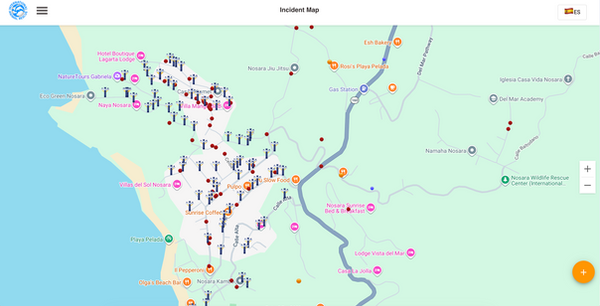
Reports allow us to identify electrocution hotspots, prioritize interventions, document the scale of the problem and provide evidence to the relevant authorities.